
M.Tech Environmental Engineering
Specialisation (ESG & Sustainability Engineering) Full Time
Duration2 Years
Course Fee1.80 Lakhs
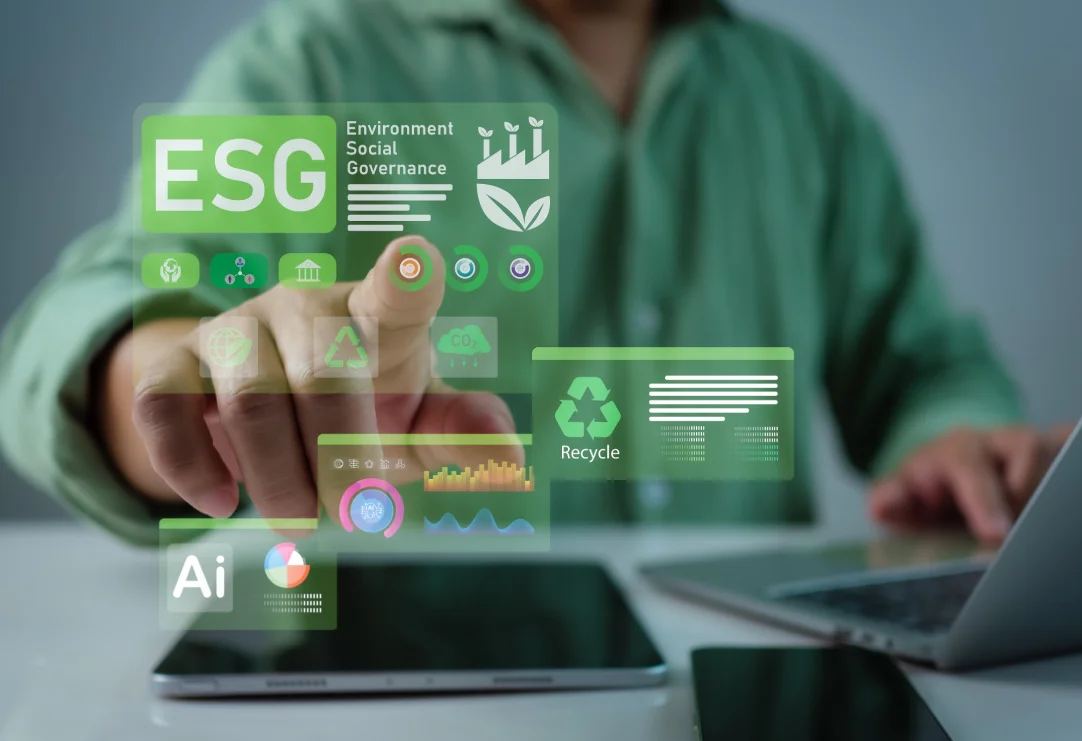
Environmental engineering is a subfield of engineering that is concerned with the protection and preservation of the environment and environmental resources as well as the protection of populations from environmental threats.
Environmental engineers study water & waste treatment, solid waste management and monitor air and water quality. Students of this discipline will also study techniques for reducing environmental pollution and combating the effects of global warming among many other topics.
The objective of the program is to provide graduates from diverse disciplinary backgrounds with a detailed understanding of the most current and emerging concepts of sustainability and a high level of applied environmental knowledge and skills.
Program Specialisation
Further-more it is an objective to facilitate the development of high levels of self-learning and self-evaluation. These competencies are intended prepare candidates to take up positions of leadership where they would have specific responsibility for environmental performance.
The program is not intended to produce environmental specialists but rather to equip professionals with the most current information, awareness, knowledge and understanding of how to optimally manage environmental factors while sustaining and enhancing society.
Environmental engineering has immense scope in India for professionals who are qualified in chemical, biological, thermal, radioactive or even mechanical engineering as environmental engineering is a diverse field and requires people from diverse background. Moreover, professionals from process engineering, environmental chemistry, water and sewage treatment, waste reduction management, pollution prevention, etc are required in large numbers.
Job prospects for professionals with qualification in environmental engineering are bright in research centres, NGOs and various governmental departments working towards green development. Candidates with M.Tech in environmental engineering have opportunities to work for government built assessment committees which study and analyse the environmental risks involved in certain projects. The report of such a committee is then submitted to the concerned authority for further observation. Scholars with PhD in environmental engineering can opt for teaching jobs in colleges and universities.
Programme Specific Outcomes (PSO)
PSO 01
Design and operation of various firefighting, safety, and environmental monitoring, analysis and control tools.
PSO 02
Develop and apply analytical skills to solve health, fire, safety and environmental problems in industries/ organization.
Programme Outcomes (PO)
Acquire in-depth knowledge of specific discipline or professional area, including wider and global perspective, with an ability to discriminate, evaluate, analyze and synthesize existing and new knowledge, and integration of the same for enhancement of knowledge.

Analyze complex engineering problems critically, apply independent judgment for synthesizing information to make intellectual and/or creative advances for conducting research in a wider theoretical, practical and policy context.
Think laterally and originally, conceptualize and solve engineering problems, evaluate a wide range of potential solutions for those problems and arrive at feasible, optimal solutions after considering public health and safety, cultural, societal and environmental factors in the core areas of expertise.
Extract information pertinent to unfamiliar problems through literature survey and experiments, apply appropriate research methodologies, techniques and tools, design, conduct experiments, analyze and interpret data, demonstrate higher order skill and view things in a broader perspective, contribute individually/in group(s) to the development of scientific/technological knowledge in one or more domains of engineering.
Create, select, learn and apply appropriate techniques, resources, and modern engineering and IT tools, including prediction and modeling, to complex engineering activities with an understanding of the limitations.
Possess knowledge and understanding of group dynamics, recognize opportunities and contribute positively to collaborative- multidisciplinary scientific research, demonstrate a capacity for self-management and teamwork, decision-making based on open-mindedness, objectivity and rational analysis in order to achieve common goals and further the learning of themselves as well as others.
Demonstrate knowledge and understanding of engineering and management principles and apply the same to one’s own work, as a member and leader in a team, manage projects efficiently in respective disciplines and multidisciplinary environments after consideration of economic and financial factors.
Communicate with the engineering community, and with society at large, regarding complex engineering activities confidently and effectively, such as, being able to comprehend and write effective reports and design documentation by adhering to appropriate standards, make effective presentations, and give and receive clear instructions.
Recognize the need for, and have the preparation and ability to engage in life-long learning independently, with a high level of enthusiasm and commitment to improve knowledge and competence continuously.
Acquire professional and intellectual integrity, professional code of conduct, ethics of research and scholarship, consideration of the impact of research outcomes on professional practices and an understanding of responsibility to contribute to the community for sustainable development of society.
Observe and examine critically the outcomes of one’s actions and make corrective measures subsequently, and learn from mistakes without depending on external feedback.
Curriculum Details
| Subject Code | Subject | Credits |
|---|---|---|
| APS1701 | Air Pollution Science and Engineering | 3 |
| WWT1701 | Water and Wastewater Treatment | 3 |
| ELP1701 | Environmental Law & Policy | 3 |
| FOS1701 | Fundamentals of Sustainability | 3 |
| SDC1701 | Sustainable Development & Circular Economy | 3 |
| Subject Code | Subject | Credits |
|---|---|---|
| SHW1702 | Solid and Hazardous Waste Management | 3 |
| EIA1702 | Environmental Impact Assessment | 3 |
| ESA1702 | Environmental Sampling and Analysis | 3 |
| COE1702 | Concept of ESG | 3 |
| ASC1702 | Advances in Sustainability Science & Engineering | 3 |
| EEL1702 | Environmental Engineering Lab | 1 |
| Subject Code | Subject | Credits |
|---|---|---|
| SIP1703 | Summer Internship | 2 |
| SSI1703 | Seminar on Summer Internship | 1 |
| RPJ1703 | Research Project I | 8 |
| Subject Code | Subject | Credits |
|---|---|---|
| RPJ1704 | Research Project II | 12 |
Career Path

- Wasteland Ecologist
- Assistant Policy Specialist
- Safety Design Manager
- Environmental Engineer
- Field Chemist
- Air Quality Engineer
- Hydro-Geologist
- Waste Resource Manager Etc.
Fee Structure
Yearly
| 1st Year | 2nd Year |
|---|---|
| ₹1,05,000 | ₹75,000 |
Semester Wise
| 1st Sem | 2nd Sem | 3rd Sem | 4th Sem |
|---|---|---|---|
| ₹67,500 | ₹37,500 | ₹37,500 | ₹37,500 |
Admission Process
Complete the Application
Appear for Entrance test and interview
Get shortlisted and Received the offer letter
M.Tech Environmental Engineering Specialisation (ESG & Sustainability Engineering) Full Time Admission Requirement
Recognized basic degree in any branch of engineering or technology or MSc. in relevant branch with 50% marks.


 About Us