
Bachelor of Medical Radiology and Imaging Technology (BMRIT)
Duration3 year + 1 year Compulsory Internship
Course Fee6.30 Lakhs
Eligibility10+2
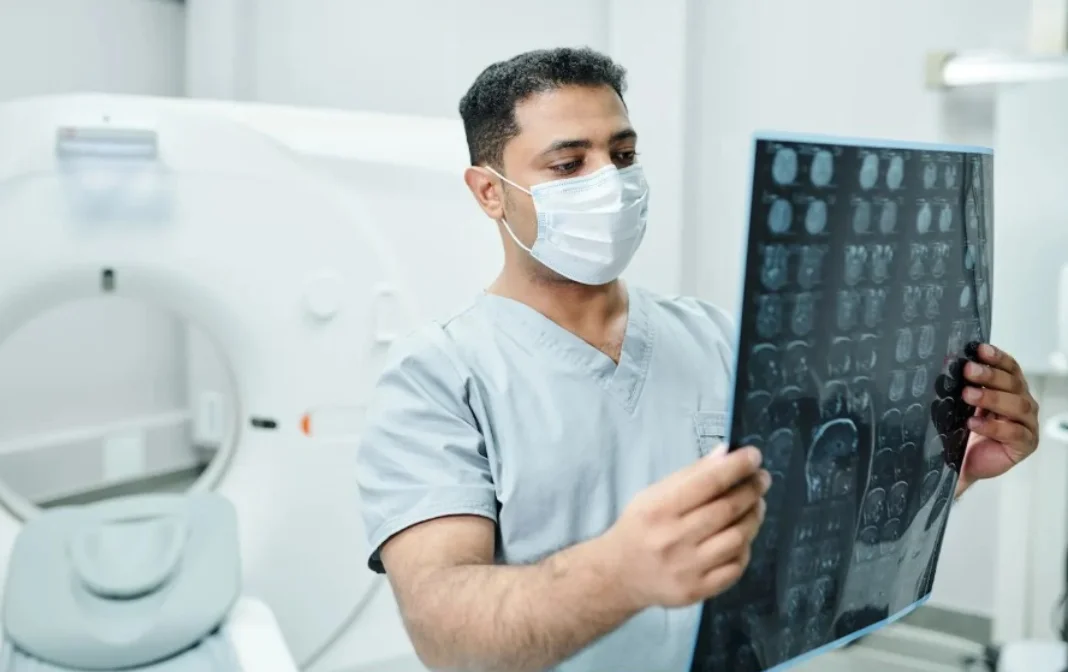
Medical imaging is an integral part of modern healthcare, enabling accurate diagnosis and effective treatment planning across a wide range of medical conditions.
Skilled radiology professionals play a vital role in delivering high-quality diagnostic imaging services that support clinical decision-making and patient care.
The Bachelor of Medical Radiology and Imaging Technology (BMRIT) at GD Goenka University is a four-year full-time undergraduate programme designed to prepare students for a dynamic and technology-driven medical imaging environment, followed by extensive clinical training and internship exposure.
Program Specialisation
The programme is structured to provide a strong foundation in human anatomy, physiology, pathology, radiation physics, and imaging sciences, while offering comprehensive training in conventional radiography, computed tomography (CT), magnetic resonance imaging (MRI), ultrasound, fluoroscopy, mammography, and other advanced diagnostic imaging modalities.
With a strong emphasis on experiential learning, students gain hands-on clinical experience in hospitals and diagnostic imaging centres, working alongside radiologists, clinicians, and allied healthcare professionals. The curriculum seamlessly integrates theoretical knowledge with practical training, enabling students to develop technical expertise, clinical competence, and patient-centred care skills.
The programme also emphasizes radiation safety, quality assurance, healthcare management, medical ethics, communication skills, and research methodology, ensuring graduates are well-equipped to meet professional standards and adapt to emerging advancements in medical imaging technology.
Graduates are well-prepared for rewarding careers in hospitals, diagnostic imaging centres, specialty clinics, research institutions, and healthcare organizations as Radiology Technologists, CT Technologists, MRI Technologists, Ultrasound Assistants, Cath Lab Technologists, Imaging Specialists, and other allied healthcare professionals, contributing significantly to accurate diagnosis, patient management, and improved healthcare outcomes.
Program Highlights
- Industry-aligned curriculum designed in accordance with NCAHP guidelines and contemporary healthcare practices.
- Experiential learning through advanced laboratories, simulation-based training, and hospital-based clinical postings.
- Exposure to modern imaging technologies, including X-ray, CT, MRI, Ultrasound, Mammography, and Digital Radiography.
- Experienced faculty with academic, clinical, and research expertise in medical imaging and allied healthcare.
- Strong emphasis on radiation protection, patient safety, quality assurance, and ethical professional practice.
- Opportunities for research, innovation, workshops, seminars, and multidisciplinary learning.
- Development of technical competence, communication, teamwork, leadership, and critical thinking through outcome-based education.
- Internship and clinical training in reputed hospitals and diagnostic centres to enhance employability.
- Excellent career opportunities in hospitals, diagnostic imaging centres, healthcare organizations, research institutions, and medical imaging industries.
Programme Specific Outcome (PSO)
PSO 01
Radiological Procedures and Technical Competence: Graduates will be able to independently perform routine and advanced diagnostic radiological and imaging procedures by operating conventional and advanced imaging equipment while adhering to established protocols and quality standards.
PSO 02
Radiation Safety, Image Quality, and Equipment Management: Graduates will be able to produce high-quality diagnostic images by applying principles of radiation protection, quality assurance, image evaluation, and routine maintenance of radiological equipment to ensure patient and operator safety.
PSO 03
Professional Practice and Patient Care: Graduates will be able to deliver ethical, patient-centered radiology services by demonstrating effective communication, teamwork, leadership, emergency management skills, and professionalism in diverse healthcare settings.
Programme Educational Objectives (PEO)
Clinical Competence
Demonstrate comprehensive knowledge of radiological sciences and apply clinical reasoning and technical skills to perform diagnostic imaging procedures such as conventional radiography, computed tomography (CT), magnetic resonance imaging (MRI), ultrasound assistance, fluoroscopy, and other imaging modalities while ensuring high standards of patient care and image quality.
Professionalism & Ethics
Exhibit professional conduct, ethical responsibility, empathy, and accountability while working with patients, radiologists, physicians, and multidisciplinary healthcare teams, adhering to radiation safety principles, patient confidentiality, and regulatory standards.
Lifelong Learning
Engage in continuous professional development through advanced education, research, evidence-based practice, and lifelong learning to adapt to emerging technologies and innovations in medical imaging and diagnostic healthcare.
Communication & Collaboration
Develop effective communication and interpersonal skills to interact with patients, radiologists, clinicians, and healthcare professionals, and demonstrate the ability to work collaboratively in multidisciplinary healthcare environments to ensure quality diagnostic services.
Social Responsibility
Contribute to improving community health by providing safe, accurate, and patient-centered diagnostic imaging services, promoting radiation protection and awareness, and supporting preventive, diagnostic, and therapeutic healthcare initiatives for enhanced patient outcomes.
Programme Outcomes (PO)
Demonstrate comprehensive knowledge of radiological sciences, human anatomy, radiation physics, imaging principles, and diagnostic imaging procedures required to function as a competent Medical Radiology and Imaging Technologist.

Apply analytical thinking, clinical reasoning, and evidence-based decision-making to perform imaging procedures, optimize image quality, troubleshoot equipment-related issues, and address patient care challenges effectively.
Plan, organize, and execute diagnostic imaging procedures efficiently, independently as well as collaboratively, while ensuring patient safety, workflow optimization, and adherence to standard operating procedures.
Demonstrate proficiency in performing routine and advanced diagnostic imaging procedures using conventional radiography, computed tomography (CT), magnetic resonance imaging (MRI), fluoroscopy, mobile imaging, and other imaging modalities, while implementing quality assurance and quality control practices.
Apply scientific knowledge, technical expertise, and professional values to function as a responsible, competent, and patient-centred radiology professional capable of contributing effectively to the healthcare system.
Utilize radiological knowledge and imaging services to support disease prevention, early diagnosis, treatment planning, and public health initiatives, thereby contributing to improved healthcare outcomes and societal well-being.
Practice responsible utilization of imaging resources by promoting radiation protection, biomedical waste management, energy-efficient equipment usage, and environmentally sustainable healthcare practices.
Demonstrate ethical conduct and legal responsibility by adhering to professional codes of practice, patient confidentiality, radiation safety regulations, national and international regulatory standards, and accreditation requirements while delivering quality healthcare services.
Communicate effectively with patients, radiologists, physicians, healthcare professionals, and other stakeholders using appropriate interpersonal, technical, and documentation skills to ensure safe and efficient patient care.
Demonstrate competence in operating, maintaining, and troubleshooting modern diagnostic imaging equipment, digital imaging systems, Picture Archiving and Communication Systems (PACS), Radiology Information Systems (RIS), and emerging imaging technologies to deliver high-quality diagnostic services.
Engage in continuous professional development through lifelong learning, research, innovation, and adoption of emerging imaging technologies to enhance professional competence and contribute towards achieving Sustainable Development Goal (SDG) 3 – Good Health and Well-being.
Curriculum Details
| Subject | L | T | P | Credit |
|---|---|---|---|---|
| Human Anatomy | 3 | 0 | 0 | 3 |
| Physiology | 3 | 0 | 0 | 3 |
| Basics of Radiation Physics | 2 | 0 | 6 | 5 |
| Introduction to Healthcare | 1 | 0 | 0 | 1 |
| Medical Terminology & Record Keeping | 1 | 0 | 0 | 1 |
| Basic Computers & Information Science | 1 | 0 | 0 | 1 |
| Medical Law & Ethics | 1 | 0 | 0 | 1 |
| Professionalism & Values | 1 | 0 | 0 | 1 |
| Principles of Management | 1 | 0 | 0 | 1 |
| English & Communication Skills | 1 | 0 | 0 | 1 |
| Radiology Clinical Education – Part I | 0 | 0 | 15 | 5 |
| TOTAL | 23 | |||
| Course Code | Subject | L | T | P | Credit |
|---|---|---|---|---|---|
| Basics of Microbiology | 2 | 0 | 0 | 2 | |
| Basics of Biochemistry | 2 | 0 | 0 | 2 | |
| Conventional Radiography & Equipment | 4 | 0 | 2 | 5 | |
| Clinical Radiography Positioning (Part I) | 4 | 1 | 6 | 8 | |
| Radiology Clinical Education – Part II | 0 | 0 | 15 | 5 | |
| Radiology Clinical Education – Part II | 0 | 0 | 15 | 5 | |
| NCA014 | Artificial Intelligence: Foundation, Applications, and Impact | 1 | - | - | 0 |
| TOTAL | 22 | ||||
| Subject | L | T | P | Credit |
|---|---|---|---|---|
| Pathology | 2 | 0 | 0 | 2 |
| Clinical Radiography Positioning (Part II) | 2 | 1 | 6 | 6 |
| Radiography & Image Processing Techniques | 2 | 0 | 2 | 3 |
| Contrast Media & Special Radiological Procedures | 2 | 1 | 6 | 6 |
| Radiology Clinical Education – Part III | 0 | 0 | 12 | 4 |
| TOTAL | 21 | |||
| Subject | L | T | P | Credit |
|---|---|---|---|---|
| Cross Sectional Anatomy | 2 | 0 | 6 | 5 |
| Modern Radiological Imaging Equipment & Physics | 2 | 1 | 2 | 3 |
| Interventional Radiology Techniques | 2 | 1 | 4 | 4 |
| Patient Care in Radiology | 1 | 1 | 4 | 4 |
| Radiology Clinical Education – Part IV | 0 | 0 | 12 | 4 |
| TOTAL | 22 | |||
| Subject | L | T | P | Credit |
|---|---|---|---|---|
| Basic Techniques in CT Technology | 4 | 1 | 8 | 9 |
| Radiation Safety in Diagnostic Radiology | 2 | 1 | 4 | 5 |
| Quality Assurance in Diagnostic Radiology & Regulatory Requirements | 1 | 1 | 2 | 3 |
| Radiology Clinical Education – Part V | 0 | 0 | 12 | 4 |
| TOTAL | 21 | |||
| Subject | L | T | P | Credit |
|---|---|---|---|---|
| Basic Techniques in MRI Technology | 3 | 1 | 8 | 8 |
| Introduction to Nuclear Medicine Techniques | 1 | 1 | 2 | 3 |
| Ultrasound Techniques | 2 | 1 | 0 | 3 |
| Biostatistics & Research Methodology | 1 | 1 | 0 | 2 |
| Radiology Clinical Education – Part VI | 0 | 0 | 15 | 5 |
| TOTAL | 21 | |||
| Subject / Posting | L | T | P |
|---|---|---|---|
| Compulsory Rotatory Internship (Clinical Training) | 0 | 0 | 40 |
| Subject / Posting | L | T | P |
|---|---|---|---|
| Compulsory Rotatory Internship (Clinical Training) | 0 | 0 | 40 |
Career Path
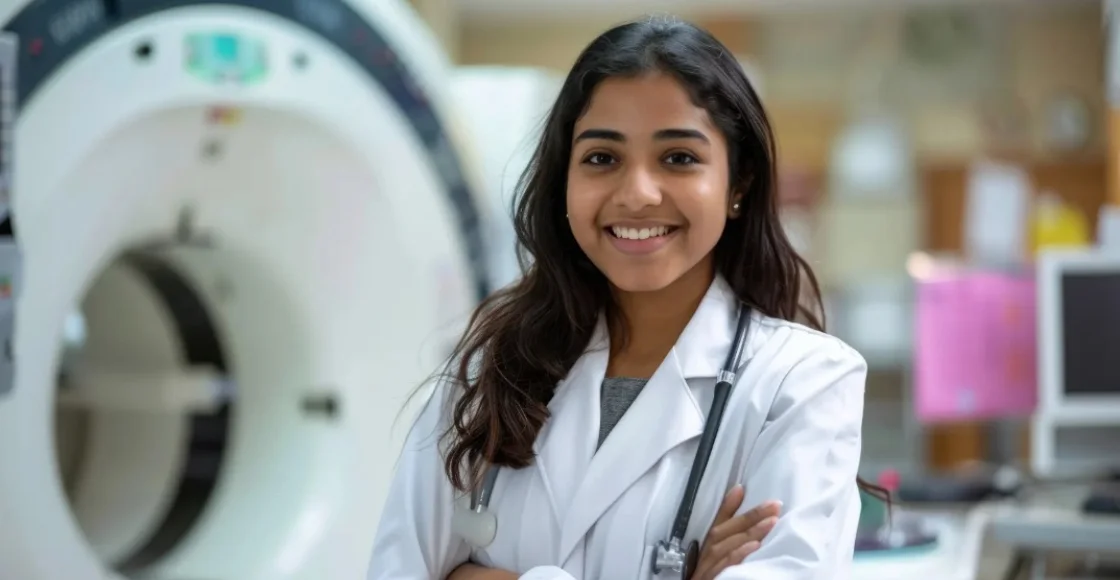
Graduates of the BMRIT programme can pursue careers as:
- Radiology Technologist
- CT Scan Technologist
- MRI Technologist
- X-ray Technologist
- Mammography Technologist
- Imaging Informatics Executive
- Application Specialist (Medical Imaging)
- Clinical Instructor/Academic Professional
- Interventional Radiology Technologist
- Research Associate in Medical Imaging
- Higher Studies (M.Sc., MBA, MPH, etc.)
- Ultrasound Assistant/Sonography Technologist
Fee Structure
Yearly
| 1st Year | 2nd Year | 3rd Year | 4th Year |
|---|---|---|---|
| ₹1,80,000 | ₹1,50,000 | ₹1,50,000 | ₹1,50,000 |
Semester Wise
| 1st Sem | 2nd Sem | 3rd Sem | 4th Sem | 5th Sem | 6th Sem | 7th Sem | 8th Sem |
|---|---|---|---|---|---|---|---|
| ₹1,05,000 | ₹75,000 | ₹75,000 | ₹75,000 | ₹75,000 | ₹75,000 | ₹75,000 | ₹75,000 |
Admission Process – Bachelor of Medical Radiology and Imaging Technology (BMRIT)
Candidates must have passed the 10+2 examination or its equivalent from a recognized State/Central Board with Physics, Chemistry, Biology, and English as compulsory subjects. Applicants must have completed 17 years of age on or before 31st December of the year of admission. Candidates with equivalent qualifications recognized by GD Goenka University are also eligible to apply.
Admission is based on the prescribed eligibility criteria and successful qualification in the Goenka Aptitude Test for Admission (GATA) followed by a Personal Interview (PI), as per the University's admission policy.
Lateral Entry Admission
Candidates holding a minimum two-year Diploma in Medical Imaging Technology/Radiography or an equivalent qualification from a recognized Government Body are eligible for direct admission to the 3rd semester (Second Year), subject to meeting the prescribed eligibility criteria and University/NCAHP norms.
Frequently Asked Questions
The programme is of 4 years, including clinical internship.
Candidates must have passed 10+2 with Physics, Chemistry, Biology, and English from a recognized board and have completed 17 years of age by 31st December of the admission year.
Yes. Admission is based on the Goenka Aptitude Test for Admission (GATA) followed by a Personal Interview (PI), as per the University admission policy.
Yes. Eligible candidates with a recognized Diploma in Medical Imaging Technology/Radiography may apply for lateral entry as per University and NCAHP norms.
Students receive hands-on training in X-ray, CT, MRI, Ultrasound, Mammography, and other imaging techniques, along with clinical postings.
Yes. The curriculum includes mandatory clinical training/internship in hospitals and diagnostic imaging centres.
Graduates can work as Radiology, CT, MRI, and X-ray Technologists in hospitals, diagnostic centres, healthcare organizations, and medical equipment companies.
Yes. Graduates can pursue M.Sc., MBA (Hospital Administration), MPH, or other postgraduate programmes.
Students have access to modern laboratories, experienced faculty, clinical training, digital learning resources and research opportunities.
The programme offers an industry-aligned curriculum, hands-on clinical training, experienced faculty, modern infrastructure, and strong career opportunities to prepare students for successful careers in medical imaging.


 About Us