
Bachelor of Optometry (B.Optom)
Duration4 Years + 1 Year Internship
Course Fee6.20 Lakhs
Eligibility10+2 *

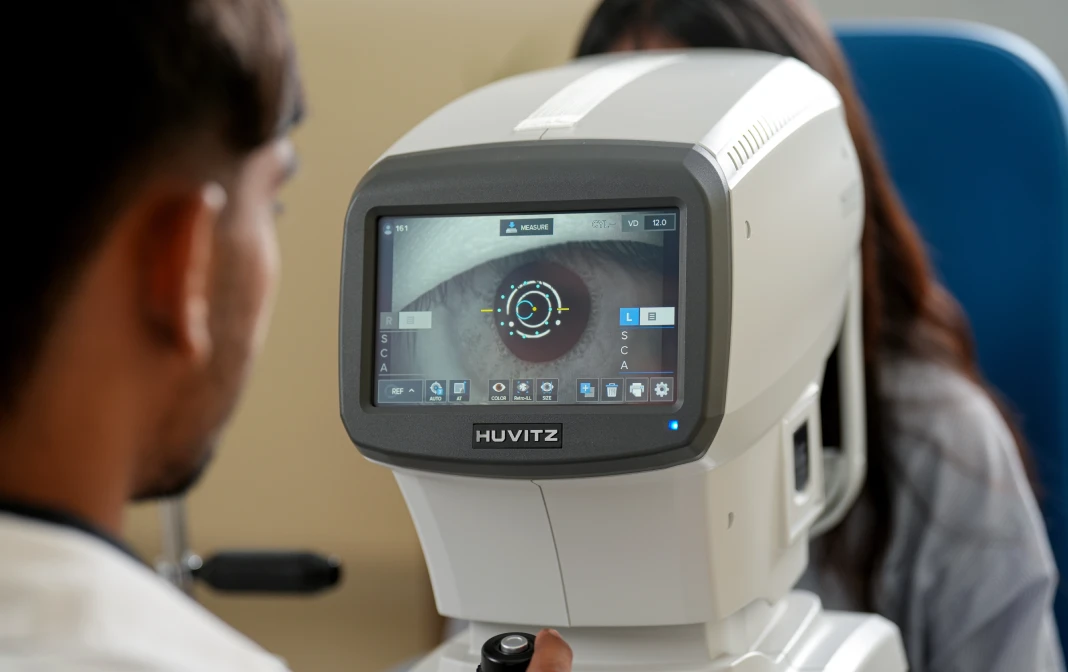
The Bachelor of Optometry is a 4-year undergraduate program (3 academic years + 1-year clinical internship) designed to train students in the science of vision and eye care.
The program offers an in-depth understanding of the anatomy, physiology, and pathology of the eye, along with hands-on training in diagnosing and managing refractive errors, ocular diseases, and visual impairments. At GD Goenka University, the B.Optom program emphasizes clinical excellence, community engagement, and holistic education. Students benefit from learning in state-of-the-art labs, regular exposure in the in-house eye clinic, and participation in vision screening camps and outreach activities.
The curriculum is designed to blend theoretical knowledge with practical application, preparing students for independent clinical practice, higher education, and roles in the healthcare sector.
Programme Specific Outcomes (PSO)
PSO 01
Graduates will attain a thorough understanding of optometry-specific subjects, including ocular pharmacology, ocular anatomy and physiology, ocular pathology, visual optics, ocular diseases, binocular vision, low vision, contact lenses, and optometric dispensing enabling them to deliver high-quality eye care services as competent optometrists.
PSO 02
Graduates will be equipped to pursue diverse career paths in optometry, including clinical practice, academic research, vision science, public health, vision rehabilitation, contact lens fitting, and ocular disease management, or establish their own optometric practices.
PSO 03
Graduates will recognize the importance of continuing education and professional development in the field of optometry to stay abreast of advancements in technology, treatment modalities, and best practices, enhancing their ability to provide cutting-edge care to patients.
Program Educational Objectives (PEOs)
Clinical Competence
Demonstrate comprehensive knowledge of vision sciences, optics, and ocular health to accurately assess, diagnose, and manage visual and ocular conditions in diverse clinical settings.
Research & Innovation
Uphold ethical principles, professional standards, and compassionate care while working collaboratively with patients, caregivers, and interdisciplinary healthcare teams.
Communication & Collaboration
Develop effective communication, counseling, and teamwork skills to promote patient education and enhance interdisciplinary collaboration.
Lifelong Learning & Innovation
Engage in ongoing professional development, pursue advanced studies, and adopt innovative technologies and evidence-based practices in optometry.
Community Health & Social Responsibility
Contribute to vision care awareness, preventive eye health programs, and outreach initiatives to improve community eye health and quality of life.
Programme Outcomes (PO)
The aim of the course is to provide comprehensive, individually focused training that prepares the students for providing a quality eye care to the patients so that at the end of the course he/she will be able to perform the following:
Apply foundational knowledge of the core subjects of vision science, anatomy, physiology, biochemistry, and optics to accurately diagnose and treat various eye health conditions, ensuring optimal patient outcomes.

Able to plan and coordinate resources, time, and personnel efficiently to optimize patient care and clinic operations.
Design and implement innovative solutions for vision correction and rehabilitation, considering environmental impact, economic feasibility, and cultural relevance.
Apply scientific research methodologies to advance the field of optometry and improve patient outcomes.
Cultivate leadership abilities and collaborate effectively within multidisciplinary teams to provide comprehensive eye care services.
Uphold ethical standards and values while delivering patient-centered care in various settings, including hospitals, clinics, and community outreach programs.
Communicate proficiently with patients, healthcare professionals, and the community to educate, inform, and advocate for eye health and vision care.
Adhere to professional code of conduct and legal regulations to promote the integrity and reputation of the optometry profession.
Utilize state-of-the-art technologies and diagnostic tools to assess eye health, develop treatment plans, and monitor patient progress.
Implement environmentally sustainable practices in optometric practice, including waste management and the use of eco friendly materials in eyewear and equipment.
Recognize the importance of lifelong learning and professional development to stay abreast of advancements in optometric research, technology, and patient care
Curriculum Details
| Course Code | Course Title | Lectures (L) | Tutorial (T) | Practical (P) | Total Credits | Course Type |
|---|---|---|---|---|---|---|
| BOP101 | General Anatomy | 3 | 0 | 1 | 3.5 | MDC |
| BOP102 | General Physiology | 3 | 0 | 1 | 3.5 | MDC |
| BOP103 | General Biochemistry | 3 | 0 | 1 | 3.5 | MDC |
| BOP104 | Physical Optics | 3 | 0 | 1 | 3.5 | MDC |
| BOP105 | Mathematics & Geometrical Optics-I | 3 | 0 | 1 | 3.5 | Major |
| BOP106 | Introduction to Optometry# | 2 | 0 | 0 | 2 | Major |
| BOP107 | Nutrition# | 1 | 0 | 0 | 1 | MDC |
| BOP108 | Communication# | 1 | 0 | 2 | 3 | AEC |
| BOP109 | Clinical Optometry I | 0 | 0 | 4 | 4 | Internship |
| Total | 19 | 0 | 11 | 24.5 | ||
| #Non-university exams | ||||||
| Course Code | Course Title | Lectures (L) | Tutorial (T) | Practical (P) | Total Credits | Course Type |
|---|---|---|---|---|---|---|
| BOP201 | General Pharmacology | 3 | 0 | 0 | 3 | MDC |
| BOP202 | General Pathology | 2 | 0 | 0 | 2 | Minor |
| BOP203 | Ocular and related neuroanatomy | 3 | 0 | 1 | 3.5 | Major |
| BOP204 | Ocular and related neurophysiology | 3 | 0 | 2 | 4 | Major |
| BOP205 | Ocular Biochemistry | 3 | 0 | 2 | 4 | Major |
| BOP206 | Geometrical Optics-II | 3 | 0 | 2 | 4 | Major |
| BOP207 | Basics of Computers# | 0 | 0 | 2 | 1 | SEC |
| BOP208 | Clinical Optometry-II | 0 | 0 | 4 | 2 | Internship |
| NCA014 | Artificial Intelligence: Foundation, Applications, and Impact | 1 | - | - | 0 | |
| Total | 17 | 0 | 13 | 23.5 | ||
| #Non-university exams | ||||||
| Course Code | Course Title | Lectures (L) | Tutorial (T) | Practical (P) | Total Credits | Course Type |
|---|---|---|---|---|---|---|
| BOP301 | General and Ocular Microbiology | 3 | 0 | 1 | 3.5 | Major |
| BOP302 | Ocular Pharmacology | 3 | 0 | 0 | 3 | Major |
| BOP303 | Visual optics –I | 3 | 0 | 2 | 4 | Major |
| BOP304 | Optometric optics | 3 | 0 | 2 | 4 | Major |
| BOP305 | Ocular Disease –I | 3 | 0 | 0 | 3 | Major |
| BOP306 | Indian Medicine and Telemedicine# | 2 | 0 | 0 | 2 | AEC |
| BOP307 | Clinical Optometry-III | 0 | 0 | 8 | 4 | Internship |
| Total | 17 | 0 | 13 | 23.5 | ||
| #Non-university exams | ||||||
| Course Code | Course Title | Lectures (L) | Tutorial (T) | Practical (P) | Total Credits | Course Type |
|---|---|---|---|---|---|---|
| BOP401 | Optometric Instruments | 3 | 0 | 1 | 3.5 | Major |
| BOP402 | Clinical examination of visual system | 1 | 0 | 4 | 3 | SEC |
| BOP403 | Visual perception and psychophysics | 2 | 0 | 1 | 2.5 | Major |
| BOP404 | Visual Optics- II | 3 | 0 | 2 | 4 | Major |
| BOP405 | Ocular Disease –II | 3 | 0 | 0 | 3 | Major |
| BOP406 | Behavioral Health Psychology# | 1 | 0 | 0 | 1 | MDC |
| BOP407 | Introduction to Quality & Patient safety# | 1 | 0 | 0 | 1 | Minor |
| BOP408 | Clinical Optometry-IV | 0 | 0 | 8 | 4 | Internship |
| Total | 14 | 0 | 16 | 22 | ||
| #Non-university exams | ||||||
| Course Code | Course Title | Lectures (L) | Tutorial (T) | Practical (P) | Total Credits | Course Type |
|---|---|---|---|---|---|---|
| BOP501 | Systemic Disease | 2 | 0 | 0 | 2 | Minor |
| BOP502 | Dispensing Optics | 2 | 0 | 2 | 3 | Major |
| BOP503 | Geriatric Optometry | 3 | 0 | 0 | 3 | Major |
| BOP504 | Paediatric Optometry | 3 | 0 | 1 | 3.5 | Major |
| BOP505 | Diagnostics and therapeutics of Anterior Segment diseases | 4 | 0 | 1 | 4.5 | Major |
| BOP506 | Innovation and technology# | 1 | 0 | 1 | 1.5 | AEC |
| BOP507 | Clinical Optometry V | 2 | 0 | 4 | 6 | Internship |
| Total | 17 | 0 | 9 | 23.5 | ||
| #Non-university exams | ||||||
| Course Code | Course Title | Lectures (L) | Tutorial (T) | Practical (P) | Total Credits | Course Type |
|---|---|---|---|---|---|---|
| BOP601 | Contact lens –I | 2 | 0 | 2 | 3 | Major |
| BOP602 | Low Vision care and Rehabilitation | 2 | 0 | 2 | 3 | Major |
| BOP603 | Binocular Vision- I | 2 | 0 | 2 | 3 | Major |
| BOP604 | Diagnostics and therapeutics of Posterior segment diseases | 4 | 0 | 1 | 4.5 | Major |
| BOP605 | Optometry and Multidisciplinary aspects of Health# | 1 | 0 | 0 | 1 | Minor |
| BOP606 | Research Methodology & Biostatistics# | 2 | 0 | 0 | 2 | Major |
| BOP607 | Clinical Optometry VI | 2 | 0 | 4 | 6 | Internship |
| Total | 12 | 0 | 20 | 22.5 | ||
| #Non-university exams | ||||||
| Course Code | Course Title | Lectures (L) | Tutorial (T) | Practical (P) | Total Credits | Course Type |
|---|---|---|---|---|---|---|
| BOP701 | Contact Lens –II | 2 | 0 | 2 | 3 | Major |
| BOP702 | Binocular Vision –II | 2 | 0 | 2 | 3 | Major |
| BOP703 | Public Health & Epidemiology | 2 | 0 | 0 | 2 | Major |
| BOP704 | Law and Professional ethics-Optometry. # | 1 | 0 | 0 | 1 | Minor |
| BOP705 | Community eye health# | 0 | 0 | 3 | 1.5 | SEC |
| BOP706 | Clinical Optometry VII | 2 | 0 | 4 | 6 | Internship |
| BOP707 | Research Project – I # | 0 | 0 | 6 | 3 | Research Project |
| Total | 9 | 0 | 17 | 19.5 | ||
| #Non-university exams | ||||||
| Course Code | Course Title | Lectures (L) | Tutorial (T) | Practical (P) | Total Credits | Course Type |
|---|---|---|---|---|---|---|
| BOP801 | Occupational optometry | 2 | 0 | 1 | 2.5 | Major |
| BOP802 | Practice Management | 2 | 0 | 0 | 2 | Minor |
| BOP803 | Community eye health and Tele-optometry# | 1 | 0 | 4 | 3 | SEC |
| BOP804 | Data science for healthcare# | 1 | 0 | 1 | 1.5 | AEC |
| BOP805 | Clinical Optometry VIII | 2 | 0 | 4 | 6 | Internship |
| BOP806 | Research Project – II | 0 | 0 | 8 | 4 | Research Project |
| Total | 8 | 0 | 18 | 19 | ||
| #Non-university exams | ||||||
| Course Code | Course Title | Lectures (L) | Tutorial (T) | Practical (P) | Total Credits | Course Type |
|---|---|---|---|---|---|---|
| BOP901 | B Optom Internship -I | 3 | 0 | 77 | 41.5 | Internship |
| BOP1001 | B Optom Internship -II | 3 | 0 | 77 | 41.5 | Internship |
| Total | 6 | 0 | 154 | 82 | ||
| #Non-university exams | ||||||
Career Path
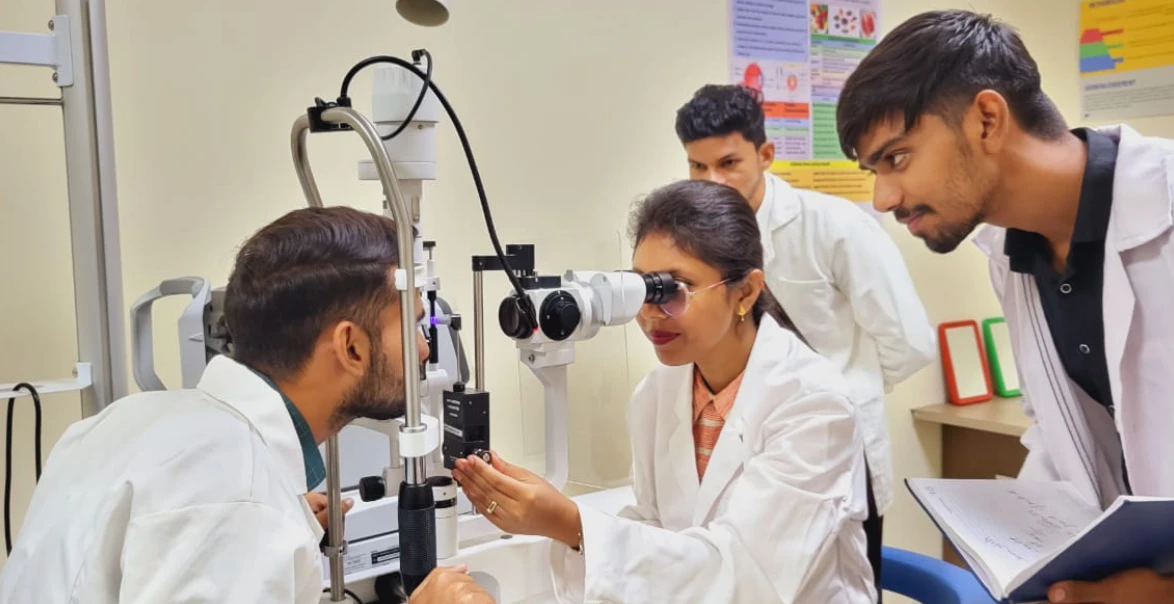
Graduates of the B.Optometry program are well-equipped to enter the eye care industry with a wide range of job opportunities, including:
- Clinical Optometrist in eye hospitals, multi-specialty hospitals, and private clinics
- Optometrist in Optical Retail Chains (e.g., Titan Eye+, Lenskart, Specsavers)
- Vision Screening Specialist for school and community health programs
- Contact Lens Practitioner in clinical or retail settings
- Low Vision Consultant assisting patients with visual impairment
- Optometric Technician supporting ophthalmologists in diagnostics and surgery
- Corporate Sector Roles in lens companies, equipment manufacturers, or product training
- Entrepreneurship – start independent optometry clinics or optical practices
- Further Studies – eligibility for M.Optom or MBA in Healthcare Management
Fee Structure
Yearly
| 1st Year | 2nd Year | 3rd Year | 4th Year | 5th Year |
|---|---|---|---|---|
| ₹1,70,000 | ₹1,50,000 | ₹1,50,000 | ₹1,50,000 | - |
Semester Wise
| 1st Sem | 2nd Sem | 3rd Sem | 4th Sem | 5th Sem | 6th Sem | 7th Sem | 8th Sem | 9th Sem | 10th Sem |
|---|---|---|---|---|---|---|---|---|---|
| ₹95,000 | ₹75,000 | ₹75,000 | ₹75,000 | ₹75,000 | ₹75,000 | ₹75,000 | ₹75,000 | - | - |
Admission Requirement
- Candidate shall have passed 10+2 examination conducted by the respective state / central government authorities recognized as equivalent to 10+2 examination by the Association of Indian Universities (AIU) with English as one of the subjects and Physics, Chemistry, Mathematics (P.C.M) and or Biology (P.C.B / P.C.M.B.) as optional subjects individually. Any other qualification approved by the GDGU as equivalent to any of the above examinations. In addition, candidates will have to successfully complete the Goenka Aptitude Test for Admission (GATA) and appear for a personal interview.
- Lateral entry admission: Minimum two-year diploma from a recognized institute. The candidates who possess the diploma in optometry awarded by the State Board of Technical Education, or its equivalent, are eligible to apply for lateral entry admission to the third semester of B.Optom.
Key Highlights:
- Clinical postings from early semesters
- Training in contact lenses, low vision aids, binocular vision, and pediatric care
- Simulation-based learning and case-based discussions
- Regular interaction with industry experts and hospital visits
Frequently Asked Questions
Bachelor of Optometry (B.Optom), a 5-year program including a compulsory 1-year clinical internship.
Yes, the B.Optom program follows the standards set by the Optometry Council of India (OCI) and other professional bodies. The Optometry curriculum at GD Goenka University follows the guidelines set by the National Commission for Allied and Healthcare Professions (NCAHP) Act of the Government of India, ensuring standardized education, clinical training, and professional competency.
10+2 with Physics, Chemistry, and Biology/Mathematics with at least 50% aggregate marks.
Applications can be submitted online through the GD Goenka University website by filling the form, uploading documents, and paying the application fee.
Admissions are primarily merit-based, but a test or interview may be conducted.
Graduates can pursue diverse career paths as Clinical Optometrists in hospitals and clinics, Refractionists, Optical or Corporate Consultants, or establish their own practice as Entrepreneurs in the eye care and optical industry.
Yes, students undergo clinical training in reputed hospitals, vision centers, and optical industries during the final year.
Specialized labs for refraction and optics, contact lenses, low vision, and binocular vision, along with smart classrooms, a digital library, and national/international hospital tie-ups.
Yes, GD Goenka University welcomes international students with dedicated visa and academic support.


 About Us